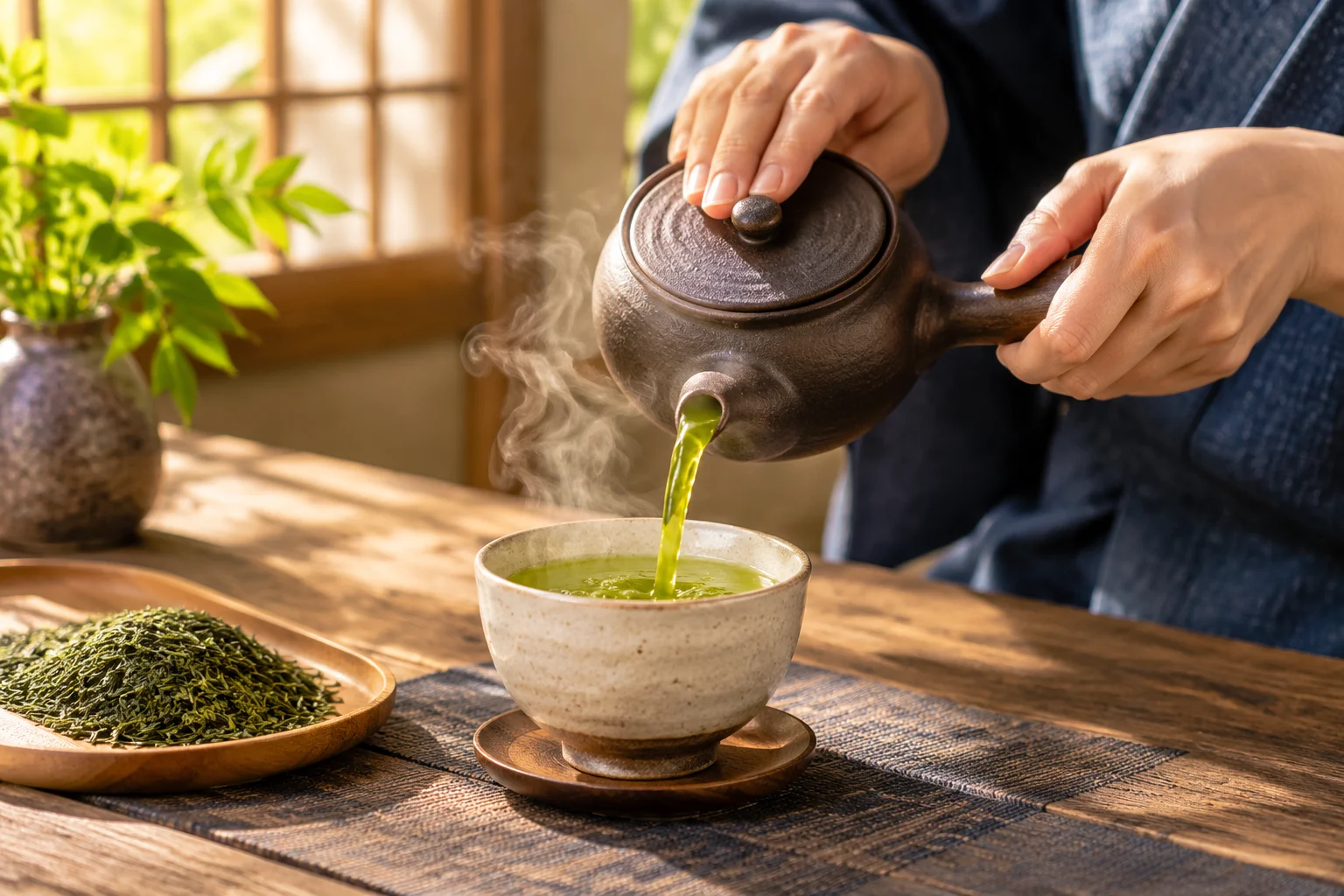
The Role of Asamushi and Fukamushi Steaming
Japanese sencha distinguishes itself from Chinese pan-fired green teas through immediate post-harvest steaming. This brief steam treatment inactivates oxidizing polyphenol oxidase enzymes within thirty seconds, locking in vivid chlorophyll and pristine vegetal aromas.
The duration of steaming dictates the physical structure of the finished leaf. Light steaming (asamushi) preserves intact, lustrous needle-like leaves yielding a transparent golden-yellow liquor with crisp floral delicacy. Deep steaming (fukamushi) ruptures plant cell walls, producing smaller, softer flakes that release intense green liquor loaded with savory suspended solids.
Water that is boiling burns the heart of the tender green leaf. Cooling the kettle honors the patient grower who nurtured the crop.
Master Brewer Kenjiro Tanaka, Shizuoka
Understanding your leaf structure allows you to calibrate steeping duration accurately. While deeply steamed fukamushi releases richness in forty-five seconds, whole-needle asamushi benefits from an unhurried seventy-five seconds inside a wide-bottomed ceramic kyusu.
Reader Observations
No comments yet. Be the first to leave a comment.
Submit an Editorial Note