Herbal Tea Benefits
Botanical Restoratives & Infusion Science

Herbal Tea Benefits

• Daniel Hayes • 6 Min Read • Botanical Tisanes
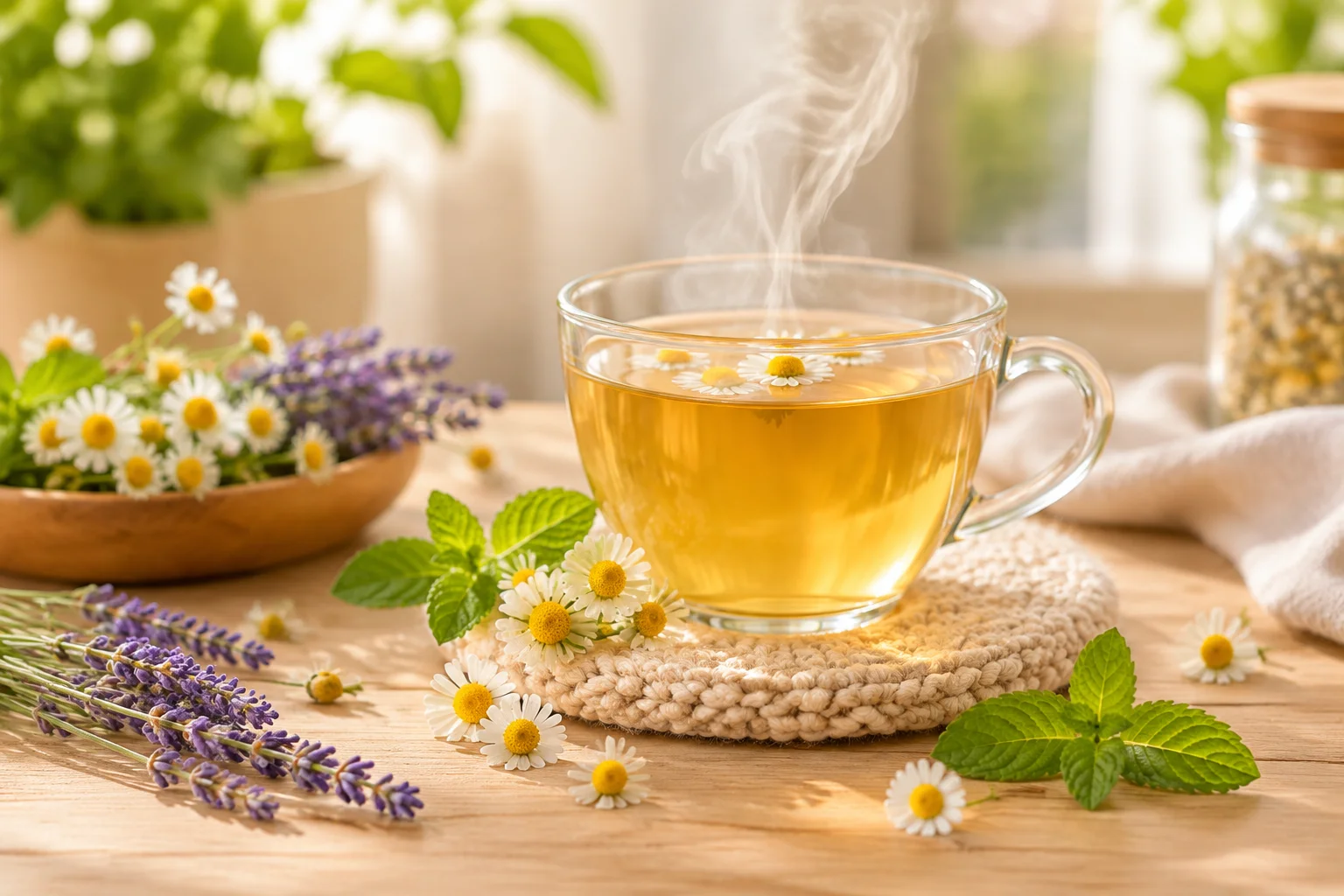
Steaming cup of herbal tea surrounded by whole dried botanical flowers and fresh herbs
JOURNAL
Curator Summary

Pure Botanical Infusions and Restorative Herbal Synergy

Unlike traditional Camellia sinensis teas, herbal tisanes are naturally caffeine-free decoctions crafted from delicate blossoms, whole aromatic herbs, and wild roots. From digestive equilibrium supported by high-menthol peppermint to restful evening recovery encouraged by chamomile flavonoids, herbal infusions deliver botanical nutrients without stimulating the central nervous system.

Key Botanical & Brewing Facts
Botanical Lineage Matricaria chamomilla, Mentha piperita, Lavandula angustifolia
Harvest Region High-elevation alpine meadows & Mediterranean valleys
Water Temperature 96°C – 100°C (Rolling boil for dense extraction)
Steep / Extraction Time 5 – 8 minutes (Covered steeping preserves volatile terpenes)
Flavor Spectrum Sweet floral honey, crisp cooling menthol, subtle citrus undertones

Experience Our Curated Tisane Selections

Whole chamomile florets, fragrant French lavender buds, and crisp whole peppermint leaves sourced directly from heritage growers.

Apigenin Flavonoids and Central Nervous System Regulation

Whole Matricaria chamomilla flowers contain concentrated stores of apigenin, an active bioflavonoid known for gentle neuromodulatory interactions. When extracted through a prolonged hot water brew, apigenin binds selectively with GABA receptors across the cerebral cortex, creating physiological ease without muscular sluggishness.

Dried lavender petals introduce complementary terpene compounds, predominantly linalool and linalyl acetate. As the steaming infusion rests before drinking, these volatile molecules vaporize into the surrounding air, initiating sensory olfactory signals that lower daytime cardiovascular tension and signal the body that evening has arrived.

A well-crafted herbal infusion does not force artificial drowsiness; it creates the chemical conditions that allow your body to surrender to natural rest.

Daniel Hayes, Master Herbalist & Sourcing Director

Because botanical infusions possess zero caffeine content, they provide comforting evening ritual value without disrupting midnight sleep architecture or hindering early morning mental clarity.

Volatile Menthol and Carminative Plant Synergy

Herbal decoctions focused on Mentha piperita deliver substantial concentrations of carminative essential oils. Menthol acts directly on smooth muscular tissue along the digestive tract, encouraging gentle bile transit and preventing gastrointestinal pressure following hearty evening dinners.

Peppermint Menthol Action

Volatile menthol gently reduces smooth muscle spasms in the gut wall, accelerating natural stomach clearance without acidic irritation.

Lemongrass Citral Infusion

Packed with natural citral and antioxidants, lemongrass provides bright botanical clarity while soothing delicate gastric mucosal linings.

Combining peppermint leaves with citrus-forward lemongrass creates a balanced thermal sensation: an initial warming steam followed by a lingering, refreshing cool finish that revitalizes the palate.

Protecting Volatile Aromatics from Premature Evaporation

Dense dried roots and fibrous botanical florets require fundamentally different brewing protocols than delicate shade-grown green teas. Because tisanes lack bitter tannins, they can endure rigorous thermal extraction without acquiring unpalatable astringency.

  • Water at Rolling Boil (100°C): Stiff plant cell walls require maximum kinetic energy to release fat-soluble floral waxes and soothing flavonoids into suspension.
  • A Strictly Enclosed Vessel: Volatile essential oils escape readily in hot vapor. Keeping your teapot or cup tightly lidded traps aromatics directly in the liquor.
  • Extended Steep (6 to 8 Minutes): Unlike green tea leaves which must be decanted rapidly, herbal ingredients require continuous thermal immersion to develop rich, honeyed body.

Soft spring water with low mineral hardness yields the cleanest extraction, keeping delicate flower oils from precipitating out as an oily, murky surface film.

Reader Observations

Archived Notes (0)

No comments yet. Be the first to leave a comment.

Submit an Editorial Note

Daniel Hayes
Article Contributor

Daniel Hayes

Daniel Hayes has spent over fifteen years researching botanical sourcing, traditional tisane formulation, and sustainable agricultural practices across Europe and East Asia. He oversees botanical curation and education at Lextationmakt.

Certified Botanical Herbalist • Tisane Curator & Sourcing Lead